

How Smart Shipping-Friendly Packaging Design Reduces Shipping Costs and Protects Products

Packaging that supports efficient and safe shipping is now crucial for modern brands, especially those focused on e-commerce. As shipping costs rise and customer demands grow, companies must choose packaging that not only protects products but also streamlines logistics.
The main benefit of well-designed shipping packaging is that it optimizes logistics, reduces costs, and maximizes warehouse space while minimizing product damage. Using durable materials, precise dimensions, efficient layouts, and protective inserts helps businesses achieve both product protection and supply chain efficiency.
This guide defines shipping-friendly packaging, explains its value for e-commerce, and shows how to cut shipping costs while protecting products.
What Is Shipping-Friendly Packaging?
Shipping-friendly packaging is custom-designed to protect products during transportation while minimizing shipping costs and logistical inefficiencies. It typically uses custom-sized boxes, durable corrugated materials, efficient packing layouts, and protective internal inserts to reduce dimensional weight charges, prevent product movement, and improve overall shipping and warehouse efficiency. This type of packaging is widely used for e-commerce shipments, subscription boxes, and product delivery packaging because it balances durability, protection, and cost control.
For e-commerce businesses, packaging plays a crucial role in controlling shipping expenses, ensuring product safety, and maintaining customer satisfaction. Poor packaging design can lead to damaged products, higher freight charges, and inefficient warehouse handling. Well-designed corrugated packaging solutions protect products during handling and transit, reduce damage-related returns, improve packing efficiency, and streamline fulfillment processes. When packaging is optimized for logistics, businesses can improve operational efficiency while delivering products in a professional and reliable manner.
Key Principles of Shipping-Friendly Packaging
Shipping-friendly packaging is achieved through several key packaging design principles. Businesses must consider factors such as packing layout, packaging materials, box dimensions, and internal protection to ensure products are shipped efficiently and safely. The following steps explain the core elements that make packaging truly shipping-friendly.
Step 1: Efficient Packing and Optimized Layout
One of the most important elements of shipping-friendly packaging is efficient packing layout. Packaging should be designed to enable efficient stacking and arrangement within shipping cartons, pallets, and containers.
Optimized packaging layouts maximize space utilization during transportation and storage in warehouses.
Good packaging design allows:
- Better stacking during transit
- Improved warehouse organization
- Reduced shipping volume
- More products shipped per load
Efficient packing enables businesses to transport more units per shipment, reducing overall logistics costs.
Step 2: Strong Yet Lightweight Corrugated Materials
Durable packaging is essential for protecting products during shipping. However, packaging must remain lightweight to avoid increasing freight costs.
Corrugated packaging provides an ideal balance between strength and lightweight protection.
Common corrugated material options include:
- E-flute corrugated – thin structure used for retail packaging and lightweight products
- B-flute corrugated – stronger structure used for shipping boxes
- Double-wall corrugated – used for heavy or fragile products requiring additional protection
Corrugated packaging also uses standardized strength ratings, such as ECT (Edge Crush Test), to ensure boxes can withstand stacking pressure during shipping and storage.
Step 3: Right-Sized Packaging
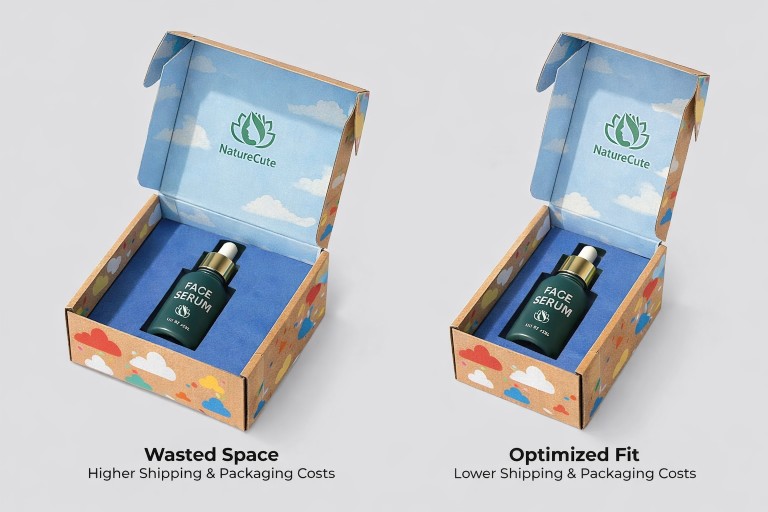
Oversized boxes significantly increase shipping costs, particularly when carriers calculate charges using dimensional weight (DIM weight).
E-commerce shipping packaging focuses on custom box dimensions that closely match the product size.
Benefits of right-sized packaging include:
- Lower shipping costs
- Reduced empty space inside boxes
- Less need for filler materials
- Improved product stability during transit
Custom-sized shipping packaging ensures products fit securely while minimizing wasted shipping space.
Understanding Dimensional Weight in Shipping
Many shipping carriers calculate shipping charges using dimensional weight, which measures how much space a package occupies rather than its actual weight.
Oversized packaging can therefore increase shipping costs even if the package itself is lightweight.
Custom shipping packaging helps businesses reduce dimensional weight by:
- Using custom-sized packaging boxes
- Minimizing empty space inside the box
- Optimizing packaging dimensions for shipping carriers
Right-sized packaging is one of the most effective ways to reduce shipping expenses.
Step 4: Smart Internal Protection
Even strong outer packaging cannot fully protect products without proper internal support. Products can shift inside the box during transportation, increasing the risk of damage.
Freight-efficient packaging uses internal protective solutions that keep products stable during transit.
Common internal protection structures include:
- Custom paperboard inserts
- Product dividers for multiple items
- Molded pulp trays for cushioning and sustainability
- Foam inserts for fragile products
These internal components stabilize products inside the box and prevent movement during shipping and handling.

Packaging Materials Comparison
Different packaging materials serve different shipping needs.
|
Packaging Material |
Best Use |
Key Benefits |
|---|---|---|
|
Paperboard (Folding Cartons) |
Retail packaging |
Lightweight, excellent print quality |
|
Corrugated Board |
Shipping packaging |
Strong protection and stacking strength |
|
Double-Wall Corrugated |
Heavy or fragile products |
Extra durability and protection |
|
Rigid Boxes |
Premium retail packaging |
Luxury appearance and durability |
Selecting the right material helps balance protection, shipping efficiency, and branding requirements.
Designing Protective Shipping Packaging for Different Products
Different product types require different packaging solutions.
|
Product Type |
Recommended Packaging |
|---|---|
|
Cosmetics |
Folding cartons with inserts |
|
Electronics |
Corrugated mailer boxes |
|
Glass products |
Double-wall corrugated boxes |
|
Subscription products |
Corrugated mailer packaging |
Shipping-Friendly Packaging Design Checklist
Before finalizing packaging design, businesses should evaluate the following factors.
✔ Right-sized packaging boxes
✔ Strong corrugated materials
✔ Protective internal inserts
✔ Efficient stacking design
✔ Lightweight packaging materials
✔ Foldable packaging structures
✔ Sustainable packaging materials
This checklist helps ensure packaging performs efficiently throughout the supply chain, from warehouse storage to final delivery.
Common Packaging Mistakes That Increase Shipping Costs
Many businesses unknowingly increase shipping costs through inefficient packaging design.
Common mistakes include:
- Using oversized shipping boxes
- Selecting materials that are too weak for the product's weight
- Failing to include protective inserts
- Using excessive filler materials
- Ignoring dimensional weight calculations
Avoiding these mistakes helps businesses improve packaging performance and reduce logistics expenses.
Additional Features of Shipping-Friendly Packaging
Foldable Packaging Structures: Flat-packed packaging designs allow businesses to store boxes efficiently in warehouses. Foldable packaging reduces storage space requirements and simplifies packaging assembly.
Lightweight Packaging Design: Using materials that balance durability with lightweight construction helps reduce shipping costs.
Sustainable Packaging Materials: Many shipping packaging solutions use recyclable materials such as corrugated board and molded pulp inserts, reducing environmental impact.
Shipping-Friendly Packaging = Lower Costs + Better Protection
Shipping-friendly packaging combines smart design, durable materials, and efficient logistics strategies. By optimizing box size, material strength, and internal protection, businesses can create packaging that reduces shipping costs while protecting products throughout the supply chain.
Smart packaging is not just about appearance; it is about designing packaging that works efficiently from warehouse storage to final delivery.
Frequently Asked Questions
Q: What is shipping-friendly packaging?
A: Shipping packaging is packaging designed to protect products during transportation while minimizing shipping costs and logistics inefficiencies. It typically uses right-sized boxes, durable corrugated materials, optimized packing layouts, and protective internal inserts to reduce dimensional weight charges and prevent product damage.
Q: What packaging materials are best for shipping products?
A: Corrugated packaging is widely considered the best material for shipping products because it offers strong protection while remaining lightweight. Common options include E-flute corrugated for lightweight retail packaging, B-flute corrugated for shipping strength, and double-wall corrugated for heavier or fragile products.
Q: How can packaging reduce shipping costs?
A: Packaging can reduce shipping costs by using custom box sizes that minimize empty space, selecting lightweight yet durable materials, and optimizing box dimensions to avoid dimensional weight charges. Efficient packing layouts and foldable packaging designs can also help lower shipping and storage expenses.
Q: What is dimensional weight in shipping?
A: Dimensional weight is a shipping pricing method used by carriers to calculate shipping costs based on a package's size rather than its actual weight. Larger packages take up more space during transportation, which can increase shipping costs even if the package itself is lightweight.
Q: Why is right-sized packaging important for e-commerce?
A: Right-sized packaging helps e-commerce businesses reduce shipping costs, minimize filler materials, and better protect products during transportation. Properly sized boxes also improve warehouse efficiency and reduce the risk of product damage during delivery.
Q: What type of packaging is best for e-commerce shipping?
A: Corrugated mailer boxes are commonly used for e-commerce shipping because they provide strong protection while remaining lightweight. These boxes are designed to withstand handling during transit and can be custom printed to enhance branding while keeping shipping costs manageable.
Q: How do custom packaging boxes improve shipping efficiency?
A: Custom packaging boxes are designed specifically for the product’s dimensions, which helps reduce empty space and unnecessary filler materials. This improves shipping efficiency by reducing dimensional weight charges, increasing packing density, and enabling more products to be transported in the same shipment.
Q: What are the most common causes of product damage during shipping?
A: Product damage during shipping often results from poor packaging design. Common causes include oversized boxes, weak packaging materials, lack of internal protective inserts, and improper stacking during transportation. Using strong corrugated materials and protective inserts can significantly reduce the risk of damage.
Professional Design & Printing Services
Printingblue offers customized commercial printing solutions to meet your business needs. Our expert team delivers top-notch design and printing services that exceed expectations. Contact us today for a free consultation.